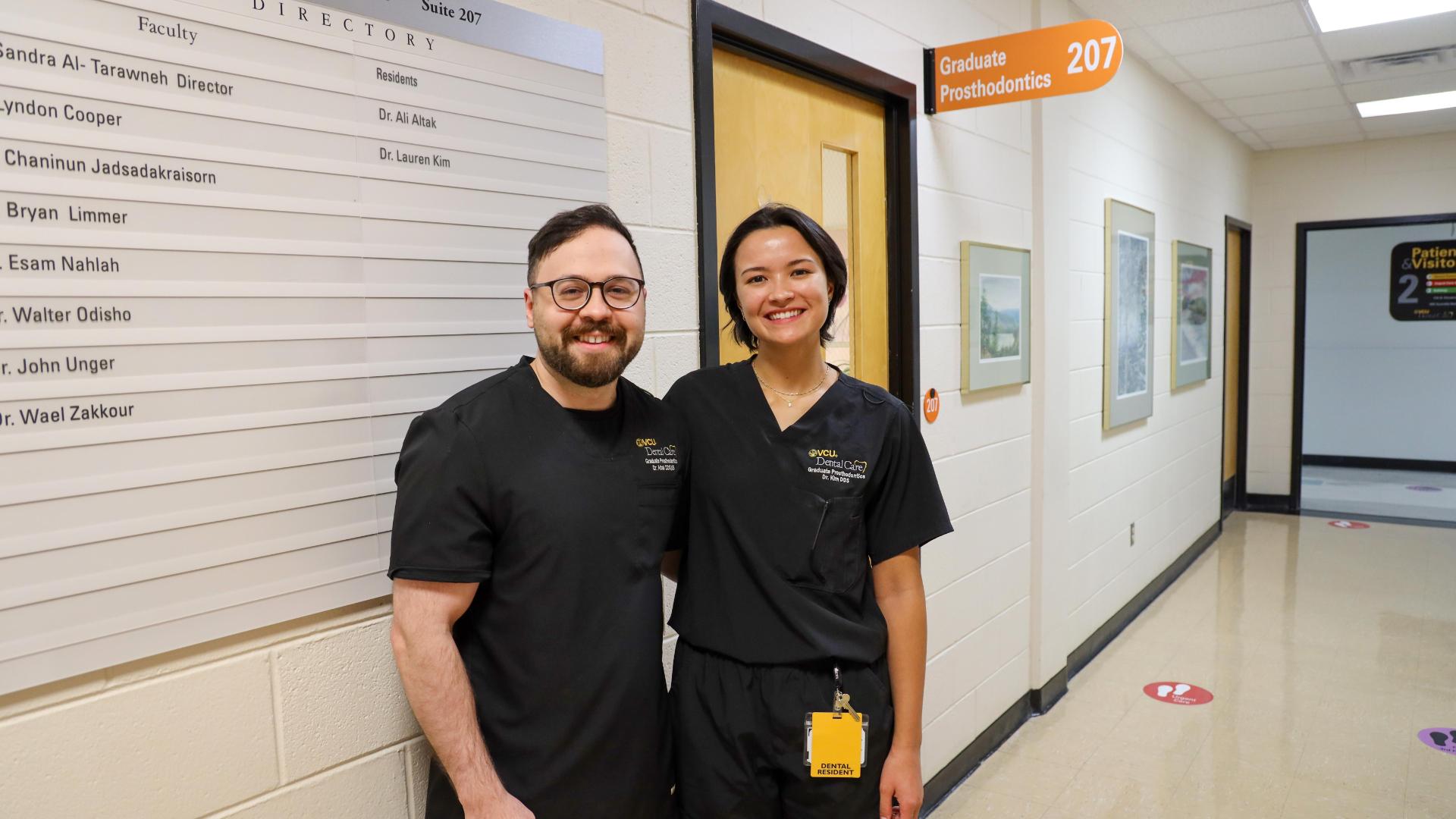
First cohort of prosthodontics residents transforms care through collaboration
Prosthodontics is all about precision, artistry and collaboration. At VCU School of Dentistry, a new graduate program has kicked off with its inaugural cohort and combines the pillars of prosthodontics with VCU SoD's core values of care.
“The program stands out as Virginia’s only program dedicated to advanced prosthodontic training, giving residents the rare opportunity to be part of its foundation and growth,” said Sandra Al-Tarawneh, D.D.S., M.S., program director. “The three-year curriculum integrates cutting-edge digital technologies with comprehensive clinical experience and interdisciplinary collaboration across all dental specialties. With its small cohort size and strong faculty mentorship, the program provides a highly personalized environment that fosters innovation, precision and professional excellence.”
The program started on July 1, 2025 and the new residents have quickly integrated into the clinical operations at VCU.
For Lauren Kim, D.D.S., and Ali Altak, D.D.S., the path to prosthodontics started with a desire to solve complex problems and give patients the best results possible.
Both residents moved to Richmond, Virginia from North Carolina, where Kim was a recent graduate from UNC Adams School of Dentistry and Altak had served as an adjunct faculty member while also working in private practice.
“It’s funny how we had never met while we were both there,” Kim said with a laugh. “Finding out we had UNC in common when we started here was a nice surprise.”
Before Altak arrived at UNC, he received his dental education at the Ajman University in the United Arab Emirates. He remembered when a faculty member from UNC visited his school to give a lecture. Inspired by his words, Altak approached him with questions.
“We had a great talk and he said, ‘hey, what do you think about coming to work in my lab for me?’” Altak recalled. “And I went. When you have a true mentor and teacher, you learn to love what you do even more. I found a true passion for dentistry.”
Altak completed his first Masters at UNC Adams School of Dentistry.
“I completed an implant fellowship before going into private practice. It was during this time that I started to get to know what I like and what I’m best at,” he said.
While working in private practice, Altak noticed that there were some cases too complex for a general dentist to solve singlehandedly. He found himself determined to learn how to solve such cases and become a practitioner that patients and dentists can depend on.
“I want to spend my life helping not only patients, but other dentists,” Altak said. “You can learn a lot from experience and from continuing education courses, but it is not the same as a condensed residency program working directly with experts in implant and restorative dentistry.”
Kim grew up in Raleigh, North Carolina and graduated with her D.D.S. from UNC Adams School of Dentistry in 2025. Although she loved handling complex patient cases, she wasn’t interested in immediately going into private practice. Prosthodontics stood out to her for the collaborative opportunities with other specialties and the combination of artistry and technology.
“I chose to specialize because I didn’t want to be pretty good at everything, I wanted to be exceptional in one thing,” Kim said. “I also knew what I liked to do and what I didn’t. I love the complex, multifaceted cases that prosthodontics presents.”
As the first residents of the program, Altak and Kim work closely together in the clinics and on crafting complex patient treatment plans.
“We come from very different backgrounds, but we get along really well and our different experiences complement each other,” Kim said. “Getting along with your coresidents is the most important thing. We spend so much time together on cases, studying and in the clinics.”
“Our different skill sets mean we are able to learn a lot from each other,” Altak agreed.
Choosing a residency is no easy task. Once a dental student chooses a specialty, they then have to attend interviews, tour schools and cities and weigh out the pros and cons of each unique program.
“When I visited Richmond, it immediately stood out to me as somewhere I could see myself living,” Kim said. “I love the atmosphere, especially in the Museum District.”
Some may think joining a residency program in its first year could be a risk, but to Altak and Kim it was an exciting opportunity to grow with and help shape a program. Having new faculty with a wide range of experience coming together to create the program promised the two residents a bright new way of thinking and learning.
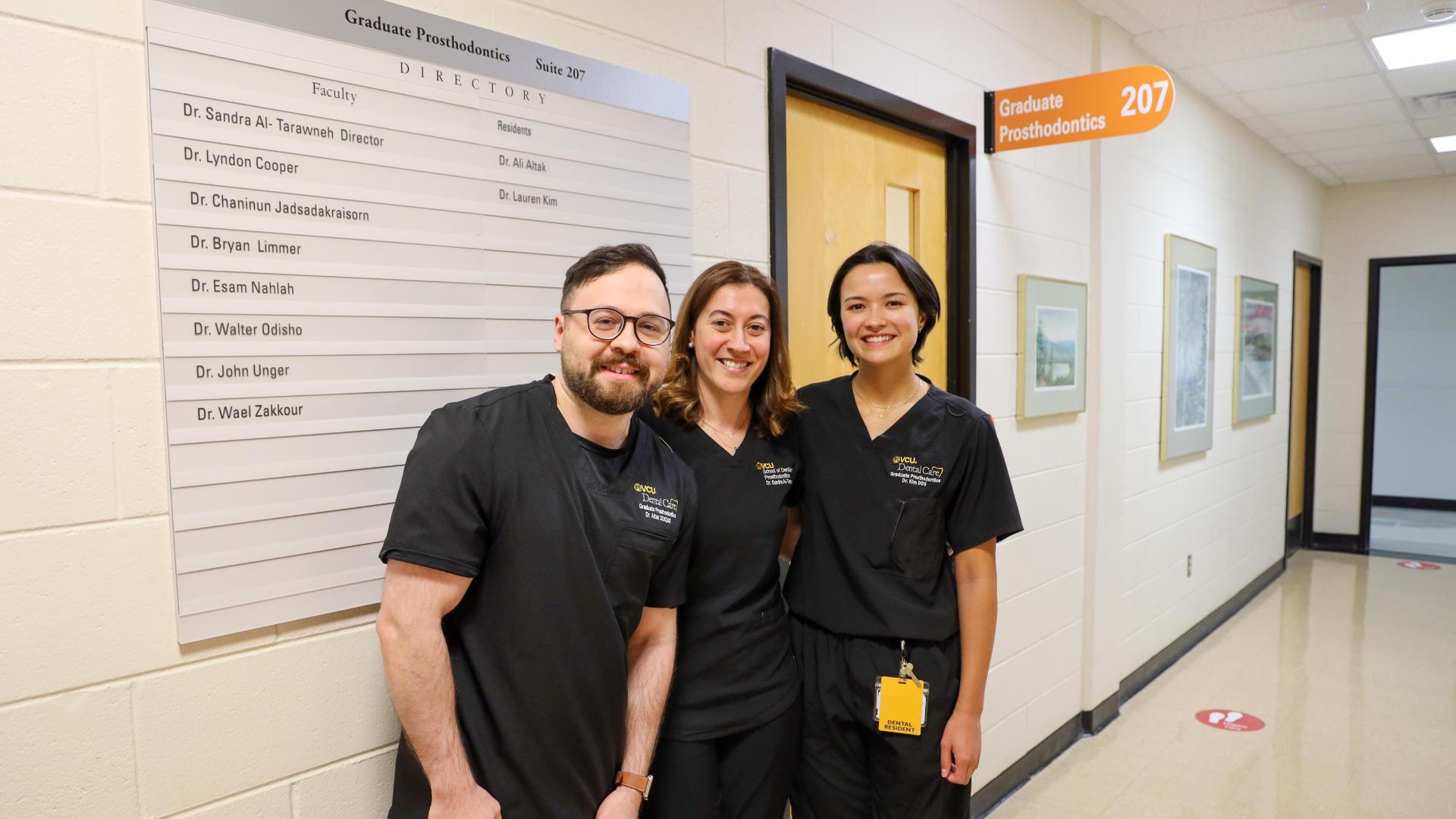
For both Altak and Kim, VCU stood out for the opportunities to work with world renowned prosthodontists, including Lyndon Cooper, D.D.S., Ph.D., Bryan Limmer, D.D.S., MS, and Sandra Al-Tarawneh, D.D.S., MS.
“Since it’s a new program, we couldn’t really look at the legacy or history of the program when making our decisions,” Altak said. “Instead, we looked at the faculty who were leading it. That was enough for us both to have complete trust and confidence in the program. It was an easy decision.”
“Getting to work so closely with them is very rewarding,” Kim said. “They teach us not only clinical practices, but about handling challenges and adapting.”
As director of the Prosthodontics graduate program, Al-Tarawneh not only helped create the curriculum and ensure the easy integration of the prosthodontics residents into the school’s clinical structure.
“As the inaugural class of the program, Drs Kim and Altak have embraced the challenge of helping shape and define the program’s foundation,” said Al-Tarawneh. “In just a few months, they have shown remarkable adaptability, professionalism and initiative—integrating seamlessly into the school community while setting high standards for clinical excellence and academic engagement. Their growth and commitment have established a strong precedent for future residents and the continued success of the program.”
The graduate program stands out for giving residents the rare opportunity to be part of its foundation and growth. The three-year curriculum integrates cutting-edge digital technologies with comprehensive clinical experience and interdisciplinary collaboration across all dental specialties. With its small cohort size and strong faculty mentorship, the program provides a highly personalized environment that fosters innovation, precision, and professional excellence.
“Collaboration with other dental specialties is essential for prosthodontic residents as comprehensive patient care often requires an interdisciplinary approach,” said Al-Tarawneh.
The prosthodontics residents often work collaboratively with other dental specialties. Complex restorative and rehabilitative cases frequently involve periodontics, oral surgery, orthodontics, endodontics and other specialties to achieve optimal function, esthetics, and long-term outcomes. This interdisciplinary approach not only helps the patient, but allows for more comprehensive and collaborative learning.
“Working closely with these disciplines helps residents develop a deeper understanding of full-mouth rehabilitation, enhances treatment planning and coordination skills and ensures patients receive cohesive, well-integrated care that addresses all aspects of oral health,” said Al-Tarawneh.
“We’re able to work together to change patients’ lives,” Altak said. “It’s the most rewarding part of the job.”